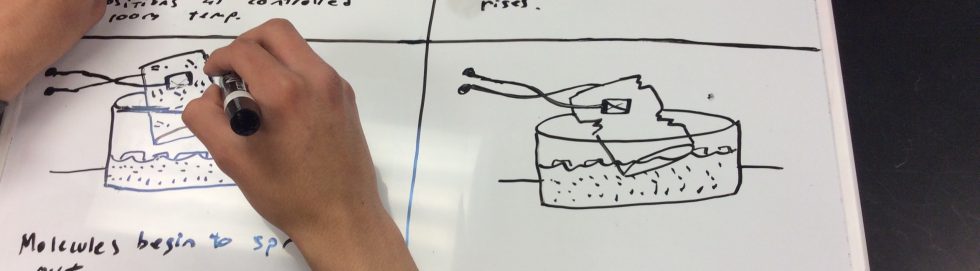
Here is a simulation that allows you to build molecules in order to strengthen your understanding:
Author Archives: Suzanne Irwin
Study Guide Answer Keys
Here are the answer keys to both study guides: KEY Study Guide GAS LAWS and KEY Study Guide ENERGY
Before Class on April 3
Here is a website that has some good resources for you electrochemical worksheet
If you look to the left, the entire section on electrochemical cells may be helpful.
Before class on March 20
Before class on March 20,
- Please watch the 2 videos below (9 min, 16 min )
- Make a comment below
Entropy Video (16 min)
sdf
Before class on March 6
In class on Monday, March 6, we will:
- Review how acids and bases react with water, and how a Ka or Kb expression relates to that reaction;
- Review buffers, what they are, how they act when they are attacked by a strong acid or strong base, and talk about how to make one;
- Review how acids and bases react with each other;
- Talk about titrations and work titration problems.
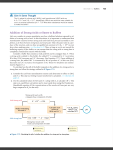
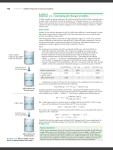
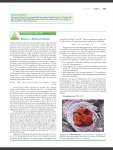
To prepare for class, please read the 7 pages below on buffers, and watch the videos 22 min, 22 min) below on titrations. The notes that go with the videos are in your note packet on titrations.

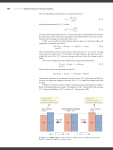
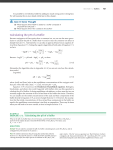
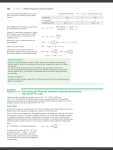
Strong Acid/Strong Base Titration
Strong Base/Weak Acid Titration
Before Class on Tuesday, Feb. 28
After reviewing the quiz we took last class, our new learning targets for Tuesday, Feb. 28 relate to buffers. You should have picked up a packet of notes for buffers in class. If not they are here: Buffer Notes . We will discuss buffers before continuing our discussion of titrations.
After Feb. 28, you will be able to:
- Describe the common ion effect;
- Explain how a buffer functions;
- Calculate the pH of a buffered solution;
- Calculate the pH of a buffer after the addition of small amounts of a strong acid or a strong base.
Please watch the 4 videos below before Tuesday (12 min, 18 min, 14 min, 12 min.):
Intro to Buffers:
Common Ions and Buffers: (18 min)
Henderson Hasselbach and Buffers: (14 min)
Using Henderson Hasselbach to calculate pH: (12 min)
Before Class on Feb. 22
Our learning objectives for Wednesday are:
| –Understand the relationship between Ka for a weak acid and Kb for its conjugate base.
–Describe the acid base properties of salts, and calculate the pH of a solution of a salt of a weak acid or a weak base |
Before class on Feb. 22:
- Please watch the video below (28 min);
- Complete the notes; and
- Make a comment.
Before Class on
Before class on Feb. 17
- Watch the two videos below (15 min. and 18 min.)
- Complete the notes
- Make a comment.
The learning objectives for class on Feb. 17 are:
| –Calculate pKa from Ka (or Ka from pKa) and understand how pKa is correlated with acid strength.
–Understand the relationship between Ka for a weak acid and Kb for its conjugate base. –Write equations for acid-base reactions, and decide whether they are product- or reactant-favored at equilibrium. –Calculate the equilibrium constant for a weak acid (Ka) or a weak base (Kb) from experimental information (such as pH, [H3O+], or [OH–] –Use the equilibrium constant and other information to calculate the pH of a solution of a weak acid or weak base. |
–Describe the acid base properties of salts, and calculate the pH of a solution of a salt of a weak acid or a weak base
These are extra videos
These videos relate to the first few pages of Notes Packet 8.2. The learning objectives they cover are:
- Explain the difference between a strong and weak acid
- Identify the 7 strong acids and the strong bases
- Calculate the pH of a strong acid
- Calculate K when given pH of a weak acid
- Calculate pH when given K for a weak acid
I covered these notes in class, but if you were absent or want a review, here they are!
Answers to Penguin ICE Problems
Here are the answers to Problems 1-5. I will post 6 and 7 later.
 chemistry matters