In class on Monday, March 6, we will:
- Review how acids and bases react with water, and how a Ka or Kb expression relates to that reaction;
- Review buffers, what they are, how they act when they are attacked by a strong acid or strong base, and talk about how to make one;
- Review how acids and bases react with each other;
- Talk about titrations and work titration problems.
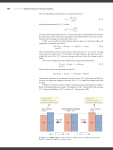
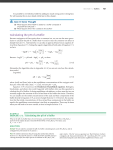
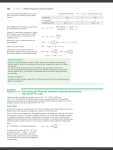
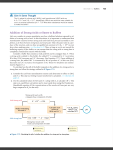
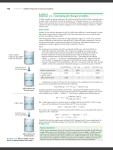
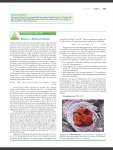
To prepare for class, please read the 7 pages below on buffers, and watch the videos 22 min, 22 min) below on titrations. The notes that go with the videos are in your note packet on titrations.

Strong Acid/Strong Base Titration
https://www.youtube.com/watch?v=Sg9OwnlrHw0
Strong Base/Weak Acid Titration
 chemistry matters
In these notes, I learned that buffer solutions can be made from either a salt with a conjugate acid/base of the weak acid/ base in a solution, or by adding enough strong acid/base to a solution to make a certain ratio of conjugate acid to conjugate base. I also learned how to calculate a pH change in a buffer after a strong acid or base was added. In the videos I learned about titration, a form of volumetric analysis, and how to calculate changes in pH when different amounts of strong acids are added to strong bases and vice versa. I learned that the equivalence point is the point at which you have added enough titrant to react with all of the analyte. I also learned about how titrations are different when strong acids are added to weak bases and when strong bases are added to weak acids, and how the conjugate base/acid pairs interact. I learned how to also calculate the pH of a solution after weak acid-strong base titration. Extra steps are necessary to find the concentration of hydronium.
LikeLike